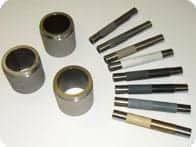
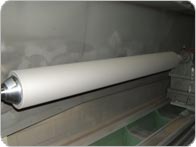
Industrial Grinding Inc. is an industry leader specializing in metalizing for a myriad of industrial applications. Our team of expert technicians is fully equipped with the knowledge and expertise to provide innovative metalizing services using high-performance thermal and plasma spraying techniques. We aim to increase the durability of your parts or components to improve your bottom line drastically.
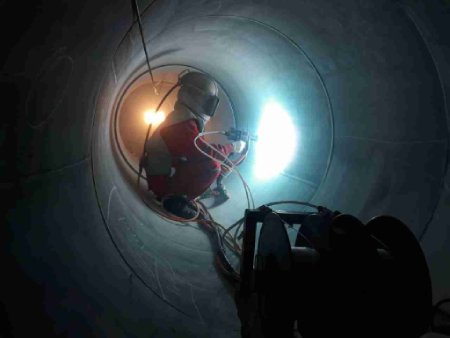
Understanding the Basics of Metalizing
Generally, metalizing is an umbrella term that refers to coating a surface or substrate with metal materials also commonly known in the industry as spray weld or welding. It may be used to enhance the properties of a substrate for improved protection, or for aesthetic purposes. By reinforcing the surface with metal coatings, components experience a significant reduction in wear, thereby extending their operational lifespan and reducing replacement costs.
Other benefits of spray weld:
- Increased protection
- Versatile material selection
- Customization and flexibility
- Fast application with minimal downtime
- Compatible with various substrates
- Enhanced thermal resistance and heat dissipation
- Improved bond strength between coatings and substrates
Additionally, spray weld can be achieved in numerous ways. However, our spray weld services focus on using the best application technique to achieve consistent results: thermal spraying.
Metalizing Through Thermal Spraying
Thermal spraying is an application technology that refers to the coating processes or techniques used to spray weld onto the surface. It uses melted or heated materials, usually ceramics and metals, to form a coating on a workpiece’s surface. During the process, the materials are heated or melted through electrical or chemical means. This method is highly versatile, allowing the application of coatings on complex geometries without compromising quality.
We utilize two types of spray welding techniques, which are:
Plasma Spray
In the plasma spray process, powders of the coating materials are fed into a plasma jet at around 10,000K. At this point, the powders melt and are sprayed by a spray welder on the substrate. This method is ideal for applications requiring high-performance coatings with exceptional adhesion and thermal stability.
Flame Spray Coating
A metal wire is melted and sprayed during the flame spray process to produce the coating. The melting of the wire is facilitated through the combustion of oxygen and a fuel gas, such as propane or acetylene. Flame spraying is a cost-effective solution for restoring worn-out components, making it a preferred choice in maintenance and repair applications.

Plasma Spray

Flame Spray coating
Industries Served by Metalizing
- Aerospace & Aviation – Protects turbine blades, landing gear, and engine parts from wear and high temperatures.
- Automotive & Transportation – Enhances durability of engine components, railcars, and heavy machinery.
- Oil & Gas – Prevents corrosion in pipelines, drilling equipment, and offshore structures.
- Manufacturing & Heavy Equipment – Restores worn shafts, rollers, and gears, reducing downtime.
- Power Generation – Increases lifespan of turbines, boilers, and generators under extreme heat.
- Infrastructure & Construction – Shields bridges, tanks, and steel structures from corrosion.
- Marine & Shipbuilding – Protects ship hulls, propellers, and offshore platforms from saltwater damage.
- Medical & Healthcare – Provides biocompatible coatings for surgical instruments, implants, and prosthetics, improving wear resistance and patient safety.
What is Spray Welding?
Spray welding is a form of specialized arc welding that combines the properties of oxyacetylene and MIG welding. It uses an electric arc between the welded surfaces and sprayed molten droplets, facilitating the fusion of the base metal and coating material.
What sets spray welding apart from other techniques is that it has less splatter than arc welding. In addition, it’s faster and offers greater accuracy than traditional spraying methods. It also allows for precise layering, having optimal coating thickness and uniformity.
Applications of Spray Welding
Spray welding has a wide range of industrial applications. Due to its benefits, we can produce quality outcomes that guarantee optimal performance to extend the service life of your components or parts.
Some typical applications include:
- Protection against corrosion and wear
- Increasing surface hardness
- Improved durability
- Enhanced electrical conductivity
- Aesthetic appeal
- Reduced wear
- Repairing and rebuilding damaged or worn-out machine parts
- Creating non-stick and low-friction surfaces for specialized applications
Spray welding is an efficient and cost-effective solution for various industries requiring durable and long-lasting components. Our team is committed to providing the highest level of excellence to exceed your expectations and produce quality outcomes.
Let Us Handle Your Metallizing Projects
At Industrial Grinding, Inc., you can trust our spray welders, who can handle small or large-scale orders without sacrificing quality. We can meet your deadlines and deliver superior-quality spray weld parts that suit your industrial needs perfectly.
Our advanced equipment and precision-driven approach guarantee that every project is completed with unmatched accuracy and consistency. Whether you need a protective coating for aerospace components or a durable finish for manufacturing machinery, our team is prepared to provide the best solutions.
Contact us today, and let’s discuss how we can help improve the functionality and longevity of your components through our spray welding services. We can also develop an affordable solution tailored to your needs!